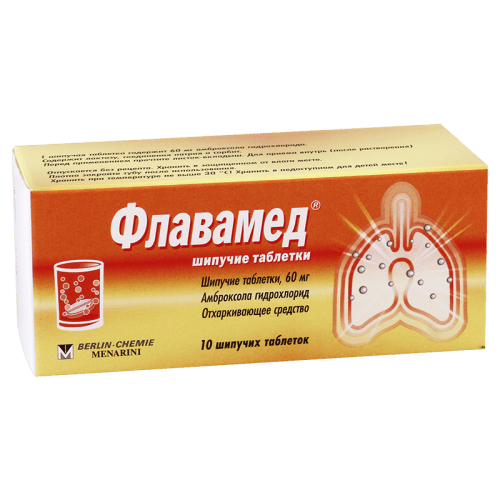
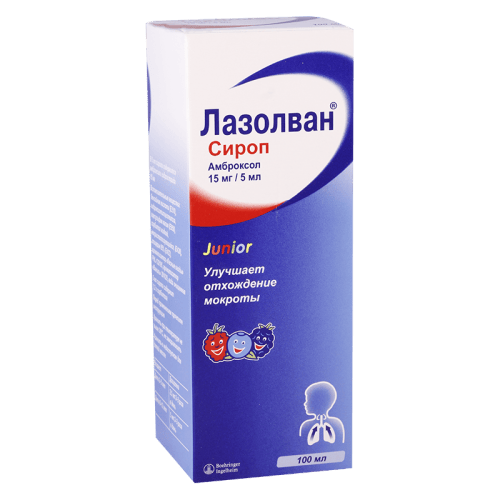
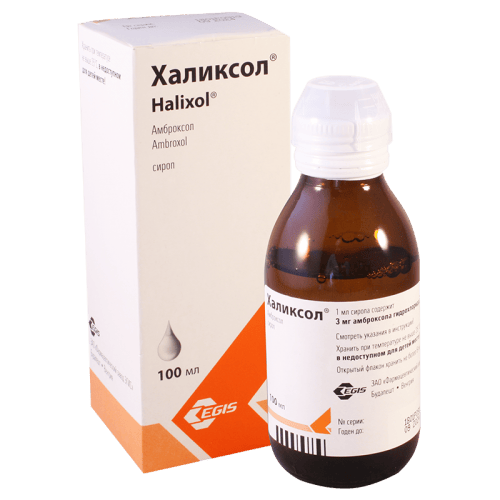
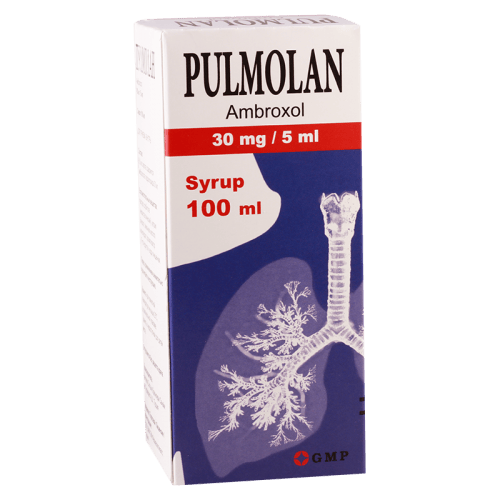
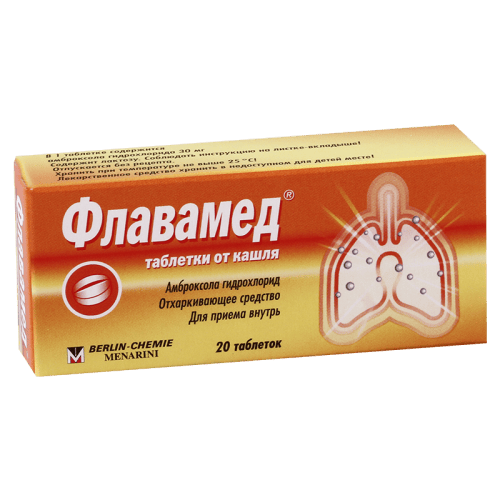
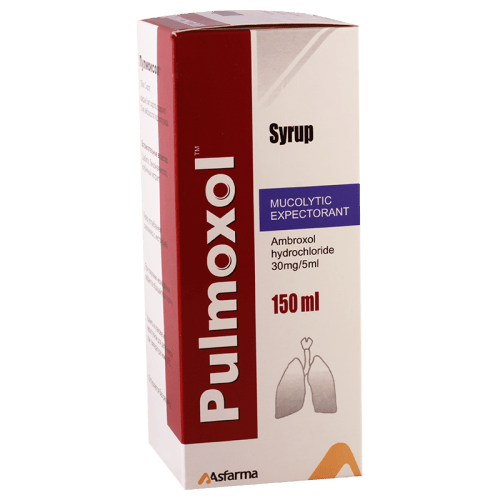
Flavamed solution contains ambroxol, which thins mucus in the bronchi and makes it easier to cough up. A convenient liquid formulation for the whole family.
International Name: Ambroxol hydrochloride
Clinical and Pharmacological Group: Pulmonology → Mucolytic and antitussive agents → Mucolytic and expectorant agents
Active ingredient: Ambroxol hydrochloride.
Each 5 ml of syrup contains 15 mg of ambroxol hydrochloride.
Excipients: Hydroxyethylcellulose, sorbitol, sodium saccharin, citric acid, glycerin, propylene glycol, sodium benzoate, apricot flavor, orange flavor, menthol, purified water.
Mucolytic agent.
Ambroxol is a synthetic secretolytic and secretomotor agent. It stimulates secretion production in the bronchi, helps thin the mucus, and improves its clearance by increasing ciliary epithelial activity.
Ambroxol increases the concentration of surfactant in the lungs and prevents its breakdown. It has a mild antitussive effect, anti-inflammatory activity, and antioxidant properties. It also stimulates local immunity.
Ambroxol 15 is used in adults and children over 2 years of age to treat acute and chronic respiratory diseases accompanied by the production of thick, difficult-to-expectorate mucus, including:
Acute and obstructive bronchitis;
Bronchiectasis;
Tracheitis;
Laryngitis;
Pharyngitis;
Sinusitis;
Rhinitis;
Pneumonia;
Bronchial asthma with difficult-to-expectorate mucus;
Treatment and prevention of postoperative pulmonary complications;
Preparation for bronchoscopy and treatment following the procedure;
Pulmonary manifestations of cystic fibrosis.
The medicine is contraindicated in patients with hypersensitivity (allergy) to ambroxol, as well as in patients with gastric or duodenal ulcer disease.
In patients with impaired kidney function, the medicine should be used only on a doctor's recommendation.
Ambroxol 15 increases the therapeutic effectiveness of doxycycline, cefuroxime, and amoxicillin by increasing antibiotic concentrations in lung tissue. The medicine also increases the effective concentration of rifampicin in the lungs.
Combining ambroxol with theophylline may be therapeutically beneficial. The medicine may be used concomitantly with cardiac glycosides and diuretics.
Concomitant use with antitussive medicines that make mucus clearance more difficult or thicken mucus is not recommended.
The medicine may be used by patients with diabetes mellitus.
Ambroxol 15 is taken orally after meals, using the measuring spoon provided.
Children aged 6–12 years: 1 measuring spoon 2–3 times daily.
Children aged 2–6 years: ½ measuring spoon 3 times daily.
Children aged 1–2 years: ½ measuring spoon 2 times daily.
Children under 1 year of age: ¼–½ measuring spoon 2 times daily.
If necessary, the dose may be doubled during the first 2–3 days of treatment.
The treatment course lasts 4–14 days.
No cases of overdose have been reported. However, digestive disturbances, discomfort or pain in the epigastric region, a feeling of stomach fullness, vomiting, and nausea may occur.
In the event of an overdose, discontinue the medicine.
Ambroxol 15 is generally well tolerated. However, prolonged use or high doses may cause heartburn, dyspepsia, a feeling of stomach fullness, vomiting, and nausea.
Rarely, allergic reactions may occur, including skin rash, urticaria, and angioedema.
Increased salivation, increased secretion from the nasal mucosa, hyperthermia, and dysuria may also occur.
If any adverse reactions occur, discontinue the medicine and consult a doctor.