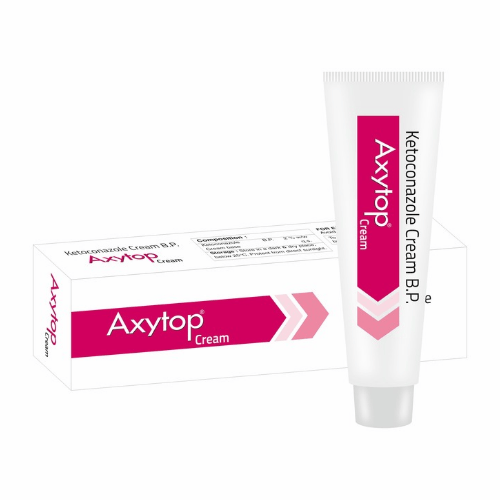
For the topical treatment of dermatophyte skin infections.
Ketoconazole B.P. 2% w/w
Cream base q.s.
For topical treatment of dermatophyte infections of the skin, including tinea corporis, tinea cruris, tinea manus, and tinea pedis, caused by Trichophyton spp., Microsporum spp., and Epidermophyton spp.
Axitop is also indicated for the treatment of cutaneous candidiasis (including vulvitis), tinea (pityriasis) versicolor, and seborrhoeic dermatitis caused by Malassezia (formerly known as Pityrosporum) spp.
Ketoconazole cream is intended for use in adults.
Tinea pedis:
Apply Axitop cream to the affected area twice daily. The usual treatment duration for mild infections is 1 week. For more severe or extensive infections, including those affecting one or both feet, treatment should continue for several days after the signs and symptoms have disappeared to prevent recurrence.
Other infections:
Apply Axitop cream to the affected areas daily, depending on the severity of the infection.
Treatment should continue for several days after all signs and symptoms have disappeared.
Usual treatment durations:
Tinea versicolor: 2–3 weeks
Tinea corporis: 3–4 weeks
If no clinical improvement occurs after 4 weeks, the diagnosis should be reassessed. General hygiene measures should be followed to help prevent reinfection.
Seborrhoeic dermatitis is a chronic condition, and recurrence is highly likely.
Method of administration: For topical application to the skin.
Experience with ketoconazole 2% cream in paediatric patients is limited.
Ketoconazole cream is contraindicated in patients with known hypersensitivity to ketoconazole or any of the ingredients in the formulation.
Ketoconazole cream is not intended for ophthalmic use.
When used in combination with a topical corticosteroid, to prevent withdrawal effects following the discontinuation of prolonged topical corticosteroid treatment, it is recommended to continue applying a mild topical corticosteroid in the morning and Axitop® in the evening. The topical corticosteroid treatment should then be gradually withdrawn over 2–3 weeks.
Common adverse effects of ketoconazole cream include:
Skin burning sensation
Erythema at the application site
Itching at the application site
Topical application:
Excessive topical application may cause erythema, swelling, and a burning sensation. These symptoms are expected to resolve after discontinuation of treatment.
Accidental ingestion:
In the event of accidental ingestion, supportive and symptomatic measures should be taken.
Store in a dark, dry place below 25°C.
Protect from direct light.
Avoid contact with the eyes.