


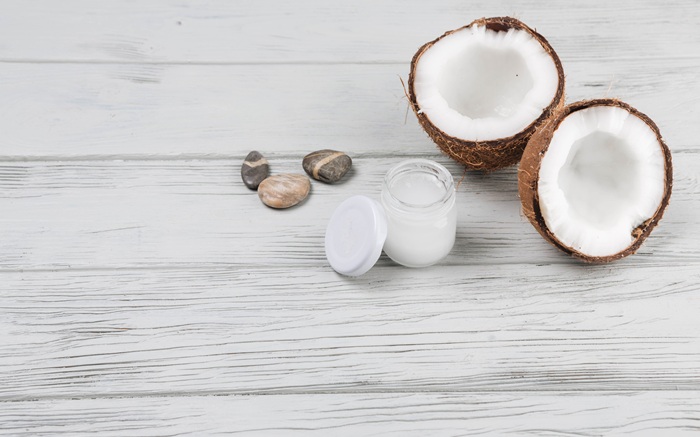
In recent years, coconut oil has enjoyed exceptional popularity worldwide. This growing interest is not accidental and is driven by its effectiveness. The oil has various purposes—it moisturizes the skin and hair, adds shine, and is excellent for daily use. Furthermore, it promotes the body's well-being and, moreover, is ideal for preparing dishes.
Naturally, due to high demand, coconut oil from various brands has appeared on the shelves of pharmacies and stores. Therefore, it is important to know how to select the best option. Specifically, what coconut oil is used for, why it is beneficial, what you should consider when storing it, and what the price and availability of the product - Coconut Oil Pharmadepot - are like—you will find this and other interesting information in the blog.
Coconut oil is one of the most versatile and natural products that ensures your health and beauty. Unique fatty acids, antioxidants, and antibacterial properties give it an important place in skin and hair care routines. It is also used as a supportive measure for immunity and digestion. It is an interesting fact that it is also excellent for preparing dishes.
Coconut oil is enriched with lauric acid, which fights bacteria, fungi, and viruses. Therefore, this oil is frequently used as a skin-soothing and antibacterial agent.
Additionally, it can provide deep hydration to the skin, restore the protective layer, eliminate dryness, and reduce irritation. That is why it is an ideal product for dry and problematic skin.
Another function of coconut oil is strengthening hair, giving it shine, and restoring damaged strands. Because of this, it is used as a mask or a hair protection serum.
This product is a source of energy because it contains MCT fats, which are quickly converted into energy, do not deposit as fat, reduce fatigue, and accelerate metabolism.
Coconut oil can improve digestion. It simplifies the digestion of fats and reduces the risk of constipation and intestinal irritation. Therefore, it is beneficial for people with sensitive stomachs.
It is particularly noteworthy that it has a positive effect on heart health. Lauric acid increases the level of "good" cholesterol (HDL) and promotes the health of blood vessels.
Coconut oil is also ideal in the kitchen—it does not burn quickly. You can use it for preparing pancakes and desserts.
Due to high demand, products from various manufacturers are available on the market. That is why it is often difficult for the consumer to make a choice. Naturally, you may not know what to pay special attention to, what technology-made coconut oil is better, or what the packaging should be like. I will introduce you to information about all of this right now.
There are several criteria by which you should be guided. First and foremost, you should be able to read the label for this.
The first criterion - if you read on the label: 100% Pure / 100% Coconut Oil - this means the product does not contain chemical substances.
The best coconut oil must be 100% pure. Avoid oils in which solvents, for example, hexane, were used during processing. Therefore, look for similar inscriptions on the label: Hexane-Free; 100% Pure Coconut Oil; No Additives; No Preservatives; or Unblended / Not Mixed with Palm Oil. If you see anything other than coconut oil in the list of ingredients, that is already a minus.
The second criterion - cold pressing. Cold-Pressed is the highest quality technology used by premium brands. This ensures that all vitamins, antioxidants, fatty acids, natural scent, and consistency are maintained in the oil. Look for these inscriptions on the product label: Cold-Pressed; Cold Extraction Method or First Press.
The third criterion - Virgin or Extra Virgin means that the coconut oil is not thermally or chemically processed. This is exactly what protects the natural structure of the product, beneficial microelements, delicate aroma, and antibacterial properties. Inscriptions on the label indicating this criterion include: Virgin Coconut Oil, Extra Virgin, or Unrefined.
The fourth criterion - Organic / BIO. This means that the raw material is grown without pesticides and chemicals, which increases the safety and quality of the product. Look for the following inscriptions on the label: Organic, BIO, EU Organic Certification, or USDA Organic. It should also be noted that compared to others, organic oil is better both for the skin and for food preparation, as it contains no toxic residues.
The fifth criterion - quality packaging. This is the guarantee of product protection. Coconut oil is stored much better in a glass jar. Compared to plastic, this material protects the product from oxidation and preserves its natural aroma and structure. Also, it should be noted that the smell or particles of plastic are not transferred to it. If the packaging says Glass Jar, Amber Glass, or BPA-Free Packaging, it means glass material is used. Remember that the packaging is as important as the specific product itself.
It is noteworthy that COCONUTA coconut oil combines all these criteria. It is distinguished by high quality and reliability.
This coconut oil is a premium quality product manufactured at low temperatures using the cold-pressing method. This ensures the preservation of all active substances, including lauric acid.
The oil is characterized by a light texture and high nutritional value. It is 100% organic and does not contain: palm oil, preservatives, flavorings, trans fats, chemical additives, or artificial colors. This product is ideal if you are looking for natural and safe coconut oil.
It is noteworthy that COCONUTA is rich in lauric acid, which is characterized by strong antibacterial and antiviralaction. Also, its composition includes MCT fats (Medium Chain Triglycerides) - they are a source of energy and promote easy digestion. Myristic acid strengthens the skin barrier. Caprylic and capric acids are distinguished by antifungal action, while Vitamin E (Tocopherol) is a strong antioxidant.
These fatty acids are what determine the unique properties of coconut oil.
As for the production stages, as already mentioned, cold-pressing technology is considered the highest standard for coconut oil production. Initially, the raw material is selected—coconut grown without chemical fertilizers and pesticides. After this, the pulp is removed and dried at low temperatures.
The next stage is the most important: cold pressing. The pulp is pressed at a temperature lower than 40°C. During this time, additional temperature, chemicals, solvents, or refining are not used. Therefore, the final product fully maintains vitamins, color, scent, and antioxidant properties.
The next stage is filtration, as a result of which natural purity, aroma, and texture are maintained. Finally, the product is packaged and reaches the shelves.
In general, it is important to buy any product in a licensed pharmacy. Often, this is the guarantee of quality and safety.
It is noteworthy that COCONUTA coconut oil is available in Georgia, and its purchase is possible in the Pharmadepot pharmacy chain. You can check information about stock on the website. Also, if you are interested in the product - Coconut Oil Pharmadepot price - you should ask at the pharmacy or visit the site.
You should know that its cost is determined by various factors and may be variable. First, an important criterion is the quality of the product and its production technology. Also, this coconut oil is imported, which is an additional cost. Pharmadepot is a pharmacy that often treats customers with promotions and offers. Therefore, the price of coconut oil may also depend on this.
Initially, it should be noted that coconut oil is a durable and stable product. Despite this, its proper storage is necessary so that it does not lose its scent, structure, and properties.
It is necessary to store it in a cool, dry, and dark place, as the oil is sensitive to temperature and light. Therefore, it is recommended to use a place protected from direct sunlight, a closed shelf, or a dark part of a cabinet for its storage.
Additionally, keep the product away from moisture. Do not store it in the bathroom or wet spaces.
Keep in mind that the jar must be closed after every use. This is necessary because dust, moisture, and bacteria may enter an open jar.
Do not touch the oil with wet or dirty hands—this may cause contamination of the product and damage to the texture.
Also, remember that a change in texture is normal. Coconut oil hardens at 20–24°C, and becomes liquid at temperatures higher than 25°C. This is a natural cycle and does not mean that the product has spoiled.
Normally, coconut oil is stored for up to 2 years, but the expiration date should always be checked. It is better to use an opened jar within the first 6-12 months.
These rules ensure that coconut oil maintains its quality, scent, texture, and beneficial properties for as long as possible.


